2-Day Course Outline
Day 1 – Foundations of Microsoft Power Automate for Business Operations
9 Module 1 – Understanding Microsoft Power Automate in a Business Environment
Objective: Build a practical understanding of how Microsoft Power Automate supports operational efficiency across departments
Hands-on: Identify high-friction manual tasks in current department workflows and classify them into possible Power Automate flow scenarios
Module 2 – Approval, Request and Workforce-Related Workflow Automation
Objective: Explore how Power Automate can improve internal approvals, requests, attendance, scheduling, and administrative monitoring
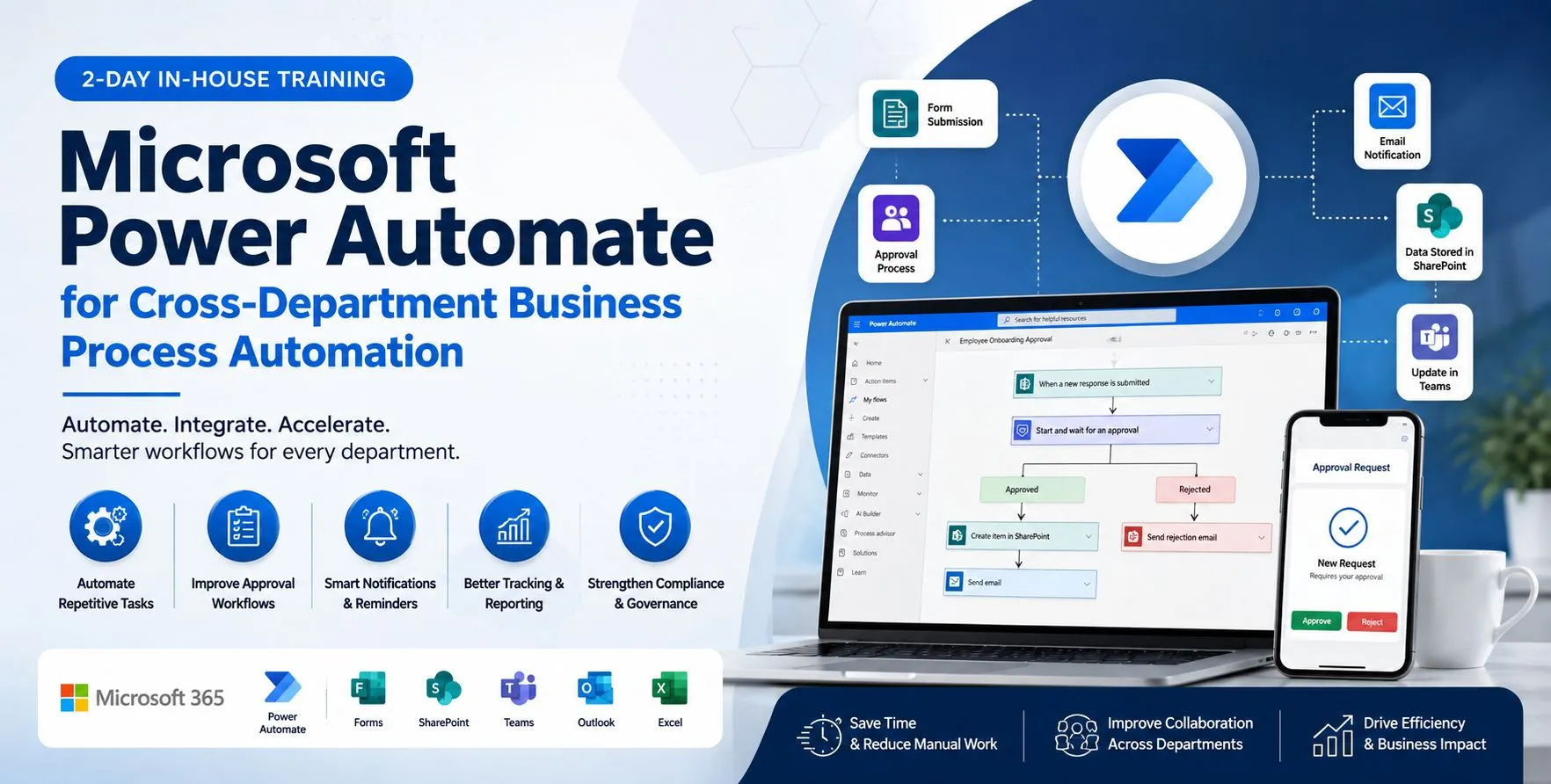
Hands-on: Design a Power Automate approval flow for request submission, manager approval, notification, and status tracking
Module 3 – Forms, Data Capture and Notifications with Microsoft 365
Objective: Use Power Automate with Microsoft Forms, SharePoint Lists, Outlook, and Teams to improve data capture and communication
Hands-on: Convert a paper/email-based request or issue-reporting process into a Microsoft Forms + Power Automate + SharePoint workflow
Module 4 – Compliance, Asset and Lifecycle Tracking with Automated Reminders
Objective: Improve governance and visibility through Power Automate for compliance and lifecycle processes
Hands-on: Build a scheduled reminder flow for training compliance, certification expiry, asset monitoring, or document renewal tracking
Day 2 – Cross-Functional Power Automate Design, Reporting Support & Integration
Module 5 – Case Management, Work Assignment and Resource Optimization Flows
Objective: Understand how Power Automate can improve case handling, routing logic, and workload visibility
Hands-on: Build a simple Power Automate case-routing flow for internal service requests or operational task handling with assignment and follow-up notifications
Module 6 – KPI Reporting Support, Alerts and Dashboard Data Preparation
Objective: Use Power Automate to support cleaner reporting inputs, automated alerts, and dashboard-ready data flows
Hands-on: Define a simple reporting support flow that updates a tracking list and sends KPI-related alerts based on status or threshold conditions
Module 7 – Cross-System Integration and Connector-Based Automation
Objective: Explore how Power Automate connectors and workflow logic can reduce duplication and improve process continuity
Hands-on: Map a multi-system process and identify where connector-based automation can reduce rework or manual reconciliation
Module 8 – Departmental Use Cases and Power Automate Solution Planning
Objective: Consolidate practical Power Automate ideas across support and control functions for business improvement
Hands-on: Create a departmental Power Automate opportunity map and shortlist 3 practical use cases for post-training action
Example Use Cases Covered
The workshop will incorporate examples such as:
- Training requests and approval workflows using Microsoft Forms and Approvals
- Leave / OT applications and attendance monitoring with automated notifications
- Compliance reminders and certification tracking via scheduled flows
- Asset lifecycle and warranty alert monitoring using SharePoint-based records
- Outlook / Teams notifications and escalation routing
- Forms-based data capture into SharePoint Lists or centralized tracking systems
- Case assignment and workload balancing through list-driven flow logic
- KPI alerting and dashboard support through automated data updates
- Cross-system data movement using Power Automate connectors
- QA, coaching, finance, facilities, and inventory automation scenarios
Suggested Practical Outputs
By the end of the workshop, participants may produce:
- A list of department-specific Power Automate opportunities
- A sample approval or notification flow design
- A workflow map for request / approval / tracking scenarios
- A use-case prioritization matrix
- Draft reporting-support automation requirements
- A post-training action plan for Power Automate initiatives
- The programme can be positioned as a practical Microsoft Power Automate business process improvement workshop with cross-department use-case exposure